
 Contact
 How to shop
Delivery
Shopping guide
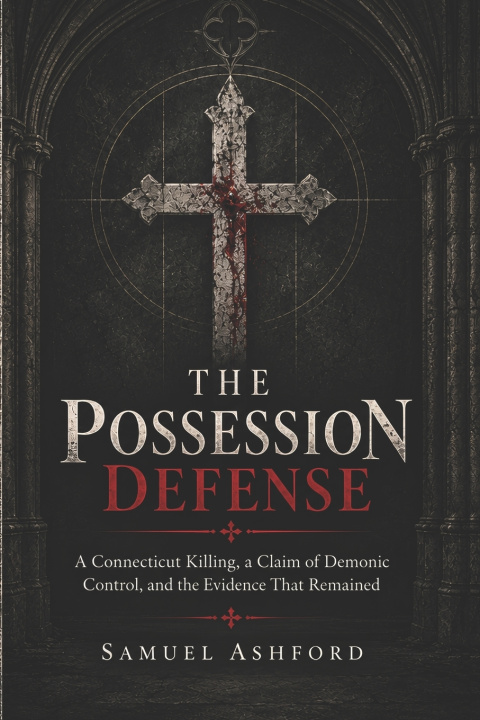
The Possession Defense
A Connecticut Killing, a Claim of Demonic Control, and the Evidence That Remained
 English
 38 b
38 b
 New
New
 Delivery to Austria
Up to 30 days for returns

A homicide became famous for a supernatural claim. This investigation asks what the evidence can actually carry.
On February 16, 1981, Alan Bono died after a confrontation in Brookfield, Connecticut. Arne Cheyenne Johnson was later convicted of first-degree manslaughter. But before the killing, Johnson had already been drawn into a family crisis surrounding David Glatzel, whose relatives interpreted disturbing experiences as demonic possession. Priests became involved pastorally, Ed and Lorraine Warren entered the household, and Johnson was later described as challenging the perceived presence himself.
The Possession Defense reconstructs those two histories separately before testing where they overlap: the homicide and the belief in possession. It follows the hours before Bono's death, witness accounts, alcohol, aggression, the knife and forensic record, Johnson's reported memory gap, and the conventional legal questions of intent, provocation, self-defense, and responsibility.
It then turns to the supernatural chronology. What was reported about David before the homicide? Which claims were recorded early, which came through family members or paranormal investigators, and which became more specific after the case drew public attention? The book examines religious interventions with care, including the crucial distinction between clergy involvement and a formally authorized major exorcism.
The courtroom section traces how attorney Martin Minnella sought to introduce demonic possession as a defense, why the judge refused to let the jury consider it as a legally recognized defense, and what the jury actually decided. The book does not treat the manslaughter verdict as proof that possession was false; it treats it as a finding of criminal responsibility in the case that was actually submitted to the jury.
Across the investigation, extraordinary claims are measured against ordinary evidence without assuming that either skepticism or belief deserves a shortcut. Medical possibilities are not turned into retrospective diagnoses. Religious belief is not treated as scientific proof. Publicity interests are not automatically equated with fabrication. Unexplained details are allowed to remain unexplained when the record does not support more.
Written in a restrained, evidence-aware true-crime style, this book is for readers interested in criminal responsibility, demonic-possession claims, courtroom evidence, religious interpretation, and the difficult boundary between influence and control.
The case became famous through the supernatural story. This investigation returns to the record, the choices that remained visible, and the person whose death began the legal case.


About the book
English

Give this book today
It's easy
1 Add to cart and choose Deliver as present at the checkout 2 We'll send you a voucher 3 The book will arrive at the recipient's addressHi! I'm Libroamiko, your book advisor.
How can I help you?