
 Contact
 How to shop
Delivery
Shopping guide
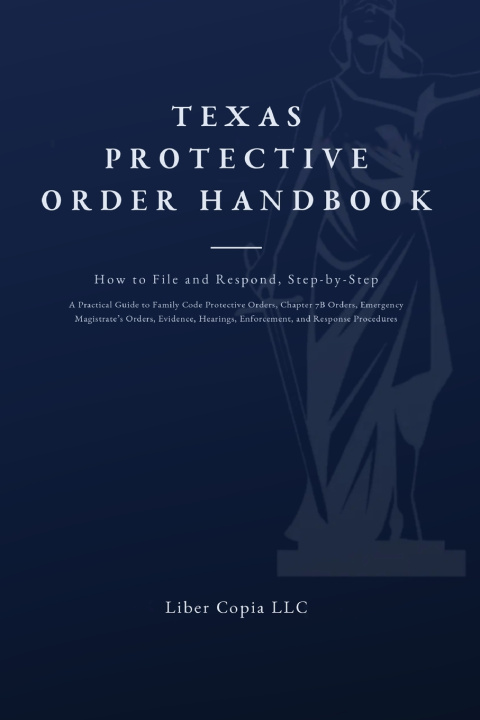
Texas Protective Order Handbook
How to File and Respond, Step-by-Step A Practical Guide to Family Code Protective Orders, Chapter 7B Orders, Emergency Magistrate's Orders, Evidence, Hearings, Enforcement, and Response Procedures.
 English
 28 b
28 b
 Coming soon
 New
New
 Delivery to Austria
Up to 30 days for returns

Texas Expunction & Nondisclosure Handbook - 2026 Edition
How to Use This Book
Texas record-clearing law is document-driven and provision-specific. A dismissal, acquittal, deferred adjudication, diversion completion, or pardon can have different consequences under different statutory routes. This handbook begins with reconstruction of the complete criminal-history file, then separates Chapter 55A expunction from Government Code Chapter 411 nondisclosure, and finally addresses agency transmission and private background-report follow-up. Each chapter follows a practical sequence: scope, governing framework, operating method, risk controls, a worked example, and a verification checklist. The reader should use the book as a structured research and preparation aid, not as authority to act without required legal supervision or judicial approval. Texas procedure is affected by statewide rules, court-specific standing orders, local rules, filing technology, and fact-specific judicial decisions. Before acting, verify the current authority, effective date, court, county, form revision, and filing method.
Table of Contents
- Part I: Understanding Record-Clearing Remedies
- Part II: Expunction Eligibility Under Chapter 55A
- Part III: Filing an Expunction Case
- Part IV: Orders of Nondisclosure
- Appendices
Book Description
Texas Expunction & Nondisclosure Handbook (2026 Edition) is an independently authored educational reference and practical guide to Chapter 55A expunctions, orders of nondisclosure, eligibility, petitions, hearings, agency notice, and post-order compliance. Published by Liber Copia Editorial / Leges Magnae Law Publishing with a legal research cut-off of July 27, 2026, it details the precise differences between Code of Criminal Procedure Chapter 55A expunction destruction-and-denial regimes and Government Code Chapter 411 Subchapter E-1 nondisclosure sealing-with-exceptions regimes. It provides guidance on reconstructing criminal-history files from fingerprint-verified DPS records, reading case dispositions, handling multi-charge arrests under State v. T.S.N., and analyzing eligibility across acquittals, pardons, dismissed/unfiled cases, pretrial intervention, Class C misdemeanors, and identity errors. It covers timing calculations, court selection, petition drafting to Article 55A.253 standards, master agency lists, electronic service and fee rules under SB 1667 and HB 16, hearing procedures, post-order compliance tracking, nondisclosure routes, Fair Credit Reporting Act (FCRA) vendor disputes, and post-relief enforcement.


About the book
English

Give this book today
It's easy
1 Add to cart and choose Deliver as present at the checkout 2 We'll send you a voucher 3 The book will arrive at the recipient's addressHi! I'm Libroamiko, your book advisor.
How can I help you?