
 Contact
 How to shop
Delivery
Shopping guide
SpaceX
 English
 41 b
41 b
 Delivery to Austria
Up to 30 days for returns

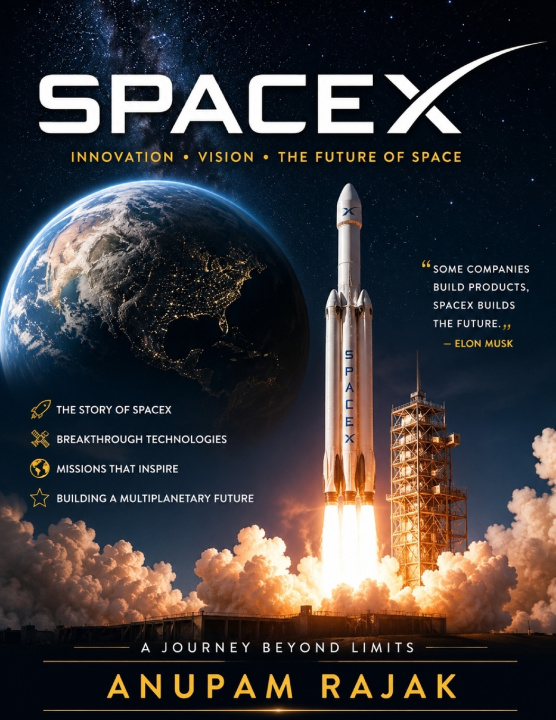
On May 30, 2020, SpaceX achieved a historic milestone by becoming the first private company to launch astronauts into Earth orbit. The mission, known as Crew Dragon Demo-2, lifted off at 3:22 p.m. EDT (19:22 UTC) from Launch Complex 39A at NASA's Kennedy Space Center in Florida. This mission marked the first crewed orbital spaceflight launched from American soil since the retirement of the Space Shuttle program in 2011, opening a new era of commercial human spaceflight.
The launch was originally scheduled for May 27, 2020, but was postponed because of unfavorable weather conditions, including the risk of lightning and strong atmospheric instability near the launch site. Safety is always the highest priority in human spaceflight, and mission controllers decided to delay the launch until weather conditions improved. Three days later, the skies cleared, allowing the Falcon 9 rocket and Crew Dragon spacecraft to begin their historic journey.
Aboard the spacecraft were two experienced NASA astronauts, Robert L. Behnken and Douglas G. Hurley. Both astronauts were veteran space shuttle pilots and were selected to test the new Crew Dragon spacecraft during its first crewed mission. Their successful journey demonstrated that commercial spacecraft could safely transport astronauts to and from the International Space Station (ISS).
The Crew Dragon spacecraft introduced advanced technology that made spaceflight more automated than ever before. Unlike earlier spacecraft that required extensive manual control, Crew Dragon used sophisticated computers and touchscreen displays to manage most flight operations. The astronauts primarily monitored the spacecraft's systems while remaining ready to intervene if necessary. Before the launch, Douglas Hurley explained this new approach by saying, "You're more of a monitor of all the systems, and you're not using all your brainpower to actually fly the vehicle." His statement reflected the remarkable advances in spacecraft automation while emphasizing that the astronauts remained fully trained to take control whenever needed.
The Falcon 9 rocket performed flawlessly, carrying Crew Dragon into orbit approximately twelve minutes after liftoff. The spacecraft then began a carefully planned journey toward the International Space Station, where it successfully docked on May 31, 2020. During their mission, Behnken and Hurley conducted scientific research, performed maintenance activities, and helped evaluate the spacecraft's performance under real operational conditions.
The success of the Demo-2 mission represented a turning point in the history of space exploration. It restored the United States' capability to launch astronauts from its own territory and demonstrated the effectiveness of public-private partnerships between NASA and SpaceX. The mission validated Crew Dragon as a reliable spacecraft for future human spaceflight and paved the way for regular commercial crew missions to the International Space Station. It also strengthened confidence in reusable rocket technology and brought humanity one step closer to ambitious goals such as returning to the Moon and eventually sending astronauts to Mars.


About the book
English

Give this book today
It's easy
1 Add to cart and choose Deliver as present at the checkout 2 We'll send you a voucher 3 The book will arrive at the recipient's addressHi! I'm Libroamiko, your book advisor.
How can I help you?