Contact
 How to shop
Delivery
Shopping guide
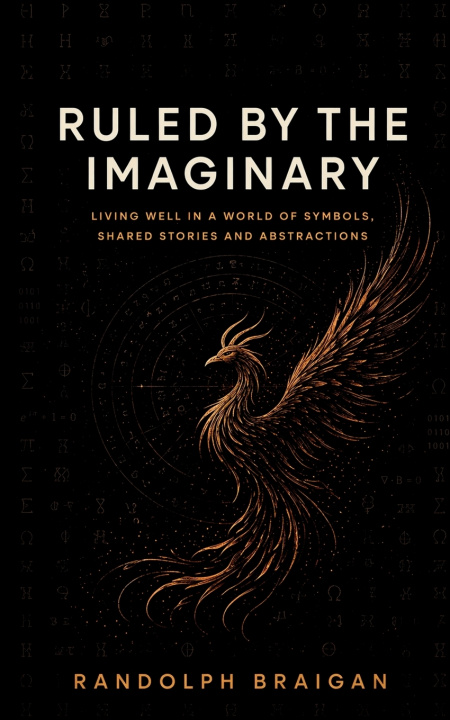
Ruled by the Imaginary
Living well in a world of symbols, shared stories and abstractions
 English
 44 b
44 b
 New
New
 Delivery to Austria
30-day return policy
Customers also purchased






Most of what governs your life does not exist.
Nations, religions and money; institutions, social status and personal reputation; even the expectations that manage behaviour - all are imaginary constructions. They are created from symbols and stories; they are sustained and enforced by nothing more than collective participation. Yet their effects are real and powerful: they shape our society, coordinate our endeavours and exert power over all of us.
Ruled by the Imaginary examines these symbolic systems and considers what kind of life remains possible once their constructed nature becomes impossible to ignore.
Combining history, sociology, anthropology and psychology, and building on extensive and authoritative references, the book traces why these systems inevitably emerge wherever humans live together, and how they come to exert real and often harmful control over individual lives. Throughout, it considers how people respond to these systems in markedly different ways: for many, they provide identity, meaning and reassurance; for others, their imaginary character produces a persistent sense of unease and confusion. It explores how these differing responses shape our relationships to authority, our sense of belonging and identity, and why periods of uncertainty often strengthen rather than weaken systems of control.
It begins with the earliest communities and concepts of human perception, and the importance of symbols and stories for building meaning and shared understanding. It then examines how these stories, symbols and the systems that are constructed from them underpin religions, nations and institutions that structure society. The later chapters move into more challenging territory, exploring three psychological orientations to power and how this explains the recurring patterns of social organisation over time and across the world. We can then look deeper, at how relationships and everyday social life carry their own form of constructed expectations and control. Drawing all this together, the book reflects on what remains when these systems are understood in their imaginary state, ending with a modest but hopeful vision for how life can be lived, based on an authentic ethic of humility, care and personal integrity.
Ruled by the Imaginary is not a manifesto or a vision for a new world. Unlike other books in this space, it does not offer a social programme or a call to action. Instead, it simply invites to reflect on how you exist within the imaginary, and offers a way of living within these systems without being entirely ruled by them: maintaining what is necessary, discarding what is not, and focusing on what remains true and real.


About the book
English

Give this book today
It's easy
1 Add to cart and choose Deliver as present at the checkout 2 We'll send you a voucher 3 The book will arrive at the recipient's addressYou might also be interested in






 /
/
 Hardback
 343.39
€
343.39
€