
 Contact
 How to shop
Delivery
Shopping guide
Microplastics
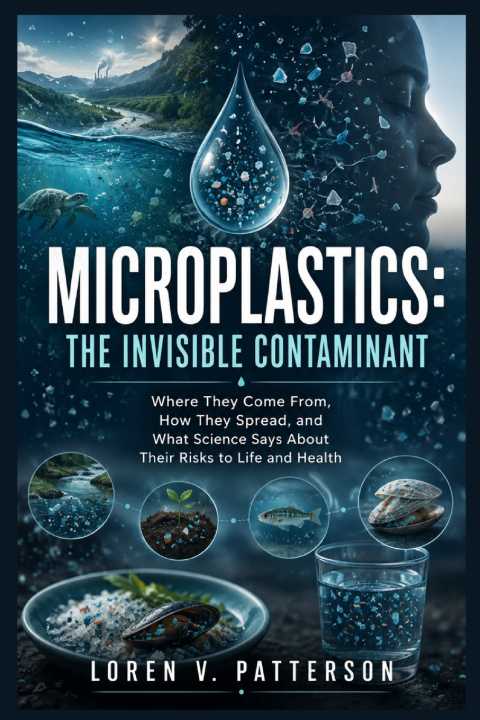
The Invisible Contaminant: Where They Come From, How They Spread, and What Science Says About Their Risks to Life and Health
 English
 38 b
38 b
 Coming soon
 New
New
 Delivery to Austria
Up to 30 days for returns

Book Description
What if one of the most widespread pollutants on Earth was so small that you could not see it?
Microplastics are now being studied in oceans, rivers, soil, food, drinking water, household dust, wildlife, and even human tissues. They come from everyday sources most people rarely think about, including synthetic clothing, vehicle tyres, paints, packaging, industrial materials, and the gradual breakdown of larger plastic products. Microplastics: The Invisible Contaminant takes readers inside this rapidly developing field of science to uncover where these particles come from, how they move through the environment, and why researchers are paying increasing attention to their possible effects on ecosystems and human health.
This accessible and carefully researched book explores the growing global problem of plastic pollution while examining what scientists currently know about nanoplastics health effects, potential human health risks, and wider environmental health risks. Rather than relying on fear or exaggerated claims, Loren V. Patterson separates established evidence from emerging research and explains the uncertainties that still surround this complex subject.
Readers will discover how plastic contamination can move from streets, homes, factories, farms, and wastewater systems into rivers, oceans, agricultural land, and the atmosphere. The book investigates concerns surrounding food contamination, drinking water contamination, and plastic particle exposure, while introducing the science of environmental toxicology and the growing research into ocean plastic pollution.
The journey continues beneath the surface of the world's waters, where marine plastic pollution is affecting organisms at different levels of aquatic ecosystems. You will learn how airborne plastic particles can travel through indoor and outdoor environments, how particles may enter the plastic food chain, and why soil plastic pollution is becoming an increasingly important concern for agriculture and terrestrial ecosystems.
The book also examines less obvious sources of contamination, including synthetic fiber pollution from clothing and household textiles and tire wear particles released through everyday transportation. By exploring the latest plastic exposure science, Patterson shows how researchers identify and measure environmental contaminants and investigate their possible consequences for wildlife, humans, and the wider environment.
From rivers and lakes to oceans and farmland, the book explains how aquatic ecosystem pollution connects with the broader plastic waste crisis. It explores the developing relationship between pollution human health research and environmental science while carefully distinguishing between detecting particles in the body and proving that those particles directly cause disease.
But this is not only a book about problems.
Microplastics: The Invisible Contaminant also examines emerging plastic pollution solutions, improvements in plastic waste management, and the importance of understanding plastic lifecycle pollution from manufacturing and product use through disposal and environmental fragmentation. By connecting these issues with the wider field of environmental pollution science, the book reveals why preventing microplastic release may ultimately be more effective than attempting to remove microscopic particles after they have spread.
Written for curious readers, students, environmentally conscious consumers, educators, and anyone concerned about the future of our planet, this book transforms a complicated scientific issue into a clear and engaging investigation.


About the book
English

Give this book today
It's easy
1 Add to cart and choose Deliver as present at the checkout 2 We'll send you a voucher 3 The book will arrive at the recipient's addressHi! I'm Libroamiko, your book advisor.
How can I help you?