
 Contact
 How to shop
Delivery
Shopping guide
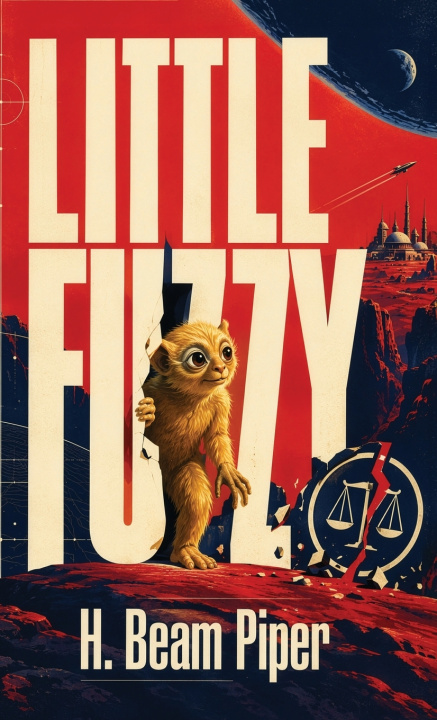
Little Fuzzy
A Science Fiction Classic of First Contact, Intelligence, and the Fight for Personhood
 English
 42 b
42 b
 New
New
 Delivery to Austria
Up to 30 days for returns

On the resource-rich planet Zarathustra, independent prospector Jack Holloway expects to spend his days hunting sunstones and staying out of other people's business. Then a small golden-furred creature wanders into his home. Curious, sociable, and startlingly adept with tools, the visitor soon brings others of its kind. Holloway calls them Fuzzies, but the more he observes them, the less willing he is to dismiss them as animals.
The distinction matters far beyond scientific curiosity. Zarathustra is controlled by the Chartered Zarathustra Company, whose rights depend on the planet being classified as uninhabited by any native sapient species. If the Fuzzies are recognized as intelligent beings, the legal and economic foundation of the company's power could collapse. Holloway's discovery therefore becomes a direct threat to one of the most powerful institutions on the planet.
Scientists, company officials, lawyers, and settlers are drawn into the dispute. What counts as intelligence? How should evidence such as tool use, communication, learning, and social behavior be interpreted? Piper turns those questions into courtroom drama and adventure, building tension around tests, testimony, competing interests, and the increasingly dangerous struggle to determine what the Fuzzies truly are.
Published in 1962, Little Fuzzy became one of H. Beam Piper's best-known novels and the opening volume of the Fuzzy series. Much of its appeal comes from the charm and individuality of the Fuzzies themselves, but the novel's deeper strength lies in the conflict surrounding their status. Piper asks who has the authority to define personhood, how economic power can distort supposedly objective judgment, and whether law can adapt when a new form of intelligence does not fit familiar categories.
Fast-moving, accessible, and idea-driven, Little Fuzzy combines first contact, legal conflict, corporate power, scientific inquiry, and an unusual friendship between species. At its center is a simple but consequential question: when another being demonstrates intelligence, choice, learning, and social bonds, what responsibilities follow from recognizing that being as a person?


About the book
English

Give this book today
It's easy
1 Add to cart and choose Deliver as present at the checkout 2 We'll send you a voucher 3 The book will arrive at the recipient's addressHi! I'm Libroamiko, your book advisor.
How can I help you?