
 Contact
 How to shop
Delivery
Shopping guide
 English
 80 b
80 b
 New
New
 Delivery to Austria
30-day return policy

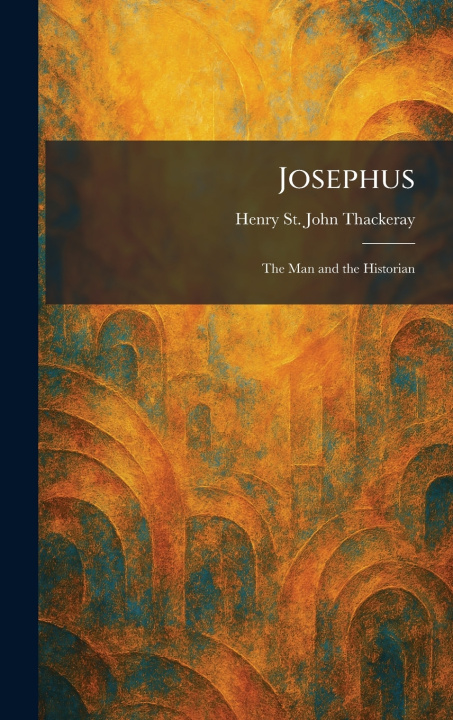
"Josephus : The Man and the Historian" offers a comprehensive examination of the life and literary output of Flavius Josephus, the preeminent historian of the Jewish world during the first century.
Written by the distinguished scholar H. St. John Thackeray, this work delves into the complex identity of a man who was both a Jewish priest and a Roman citizen. The text analyzes Josephus's major works, including "The Jewish War" and "Antiquities of the Jews", providing critical insights into his methods, motivations, and the historical context of the Greco-Roman world. Thackeray explores the tension between Josephus's loyalty to his heritage and his allegiance to the Flavian emperors, shedding light on how these dualities shaped his narrative of the Jewish revolt and the destruction of the Second Temple.
This volume remains an essential resource for students of ancient history, theology, and classical literature. It bridges the gap between historical biography and literary criticism, offering a nuanced portrait of a figure whose writings serve as the primary source for understanding Judea under Roman rule. Through Thackeray's expert lens, readers gain a deeper appreciation for the historiographical challenges and the enduring legacy of Josephus's testimony.
This work has been selected by scholars as being culturally important, and is part of the knowledge base of civilization as we know it. This work was reproduced from the original artifact, and remains as true to the original work as possible. Therefore, you may see the original copyright references, library stamps (as most of these works have been housed in our most important libraries around the world), and other notations in the work.
This work is in the public domain in the United States of America, and possibly other nations. Within the United States, you may freely copy and distribute this work, as no entity (individual or corporate) has a copyright on the body of the work.
As a reproduction of a historical artifact, this work may contain missing or blurred pages, poor pictures, errant marks, etc. Scholars believe, and we concur, that this work is important enough to be preserved, reproduced, and made generally available to the public. We appreciate your support of the preservation process, and thank you for being an important part of keeping this knowledge alive and relevant.


About the book
English
