
 Contact
 How to shop
Delivery
Shopping guide
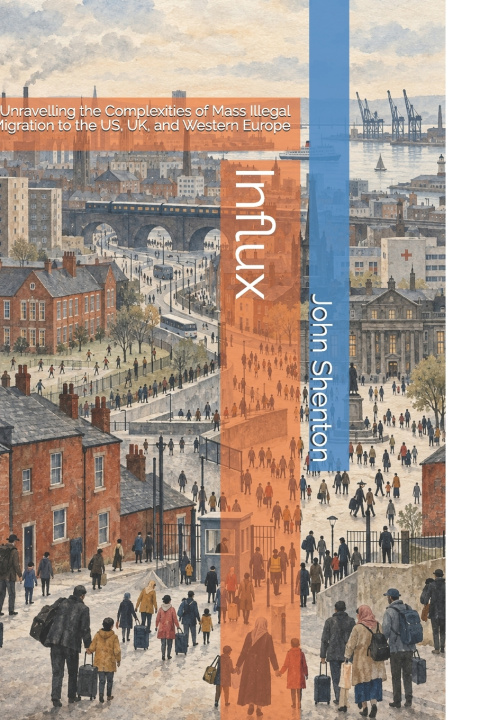
Influx
Unravelling the Complexities of Mass Illegal Migration to the US, UK, and Western Europe
 English
 34 b
34 b
 New
New
 Delivery to Austria
Up to 30 days for returns

Migration is changing the Western world, but the public argument seldom explains how the system works, who benefits from it, or who bears its costs. Between promises of enrichment and warnings of collapse, the practical questions remain unanswered: how many people can a country accommodate, under what conditions, and with whose consent?
In Influx, I examine migration through the institutions that admit, employ, house, protect and govern those who arrive. Moving from the historical origins of modern migration to the policies of Britain, Canada, the United States and Europe, he explores the relationship between humanitarian obligations, economic interests and democratic accountability.
The book considers labour shortages, wages, housing, healthcare, education and public expenditure alongside the difficult questions of cultural identity, integration, residential separation and public safety. It examines the distinctions between lawful migration, asylum, smuggling and trafficking, and investigates the commercial and political interests surrounding a system too often sustained by delay and uncertainty. It also looks beyond receiving countries to the communities migrants leave, where remittances, lost skills, conflict and environmental pressures shape the decision to move.
Written in plain, sceptical prose, Influx challenges comforting assumptions on every side. Economic growth does not automatically mean greater prosperity for existing residents. Compassion does not remove the need for competent administration. Border enforcement cannot succeed without credible decisions, lawful outcomes and cooperation between states.
Its central concern is the relationship between government and the governed. Citizens deserve an honest account of policy, newcomers deserve clear rules, and victims of institutional failure deserve more than another announcement.
Drawing on official statistics, international research and contemporary policy developments, I ask whether Western governments can establish a migration settlement that combines protection, capacity, integration and public consent, or whether they will continue to substitute political language for the demanding work of governing.


About the book
English
Categories

Give this book today
It's easy
1 Add to cart and choose Deliver as present at the checkout 2 We'll send you a voucher 3 The book will arrive at the recipient's addressHi! I'm Libroamiko, your book advisor.
How can I help you?