
 Contact
 How to shop
Delivery
Shopping guide
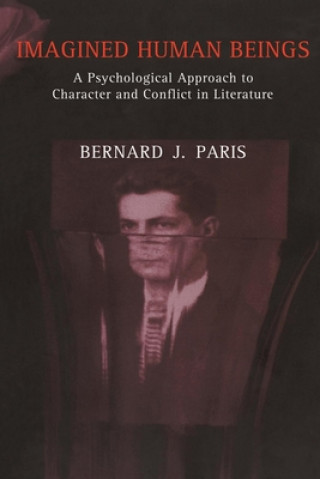
Imagined Human Beings
Psychological Approach to Character and Conflict in Literature
 English
 260 b
260 b
 Delivery to Austria
Up to 30 days for returns
Customers also purchased














 /
/
 Paperback
 13.99
€
13.99
€

One of literature's greatest gifts is its portrayal of realistically drawn characters--human beings in whom we can recognize motivations and emotions. In Imagined Human Beings, Bernard J. Paris explores the inner conflicts of some of literature's most famous characters, using Karen Horney's psychoanalytic theories to understand the behavior of these characters as we would the behavior of real people. When realistically drawn characters are understood in psychological terms, they tend to escape their roles in the plot and thus subvert the view of them advanced by the author. A Horneyan approach both alerts us to conflicts between plot and characterization, rhetoric and mimesis, and helps us understand the forces in the author's personalty that generate them. The Horneyan model can make sense of thematic inconsistencies by seeing them as the product of the author's inner divisions. Paris uses this approach to explore a wide range of texts, including Antigone, "The Clerk's Tale," The Merchant of Venice, A Doll's House, Hedda Gabler, Great Expectations, Jane Eyre, The Mayor of Casterbridge, Wuthering Heights, Madame Bovary, The Awakening, and The End of the Road.


About the book
English

Give this book today
It's easy
1 Add to cart and choose Deliver as present at the checkout 2 We'll send you a voucher 3 The book will arrive at the recipient's addressYou might also be interested in



 /
Hardback
94.09
€
/
Hardback
94.09
€





















Hi! I'm Libroamiko, your book advisor.
How can I help you?