
 Contact
 How to shop
Delivery
Shopping guide
 English
 35 b
35 b
 New
New
 Delivery to Austria
Up to 30 days for returns

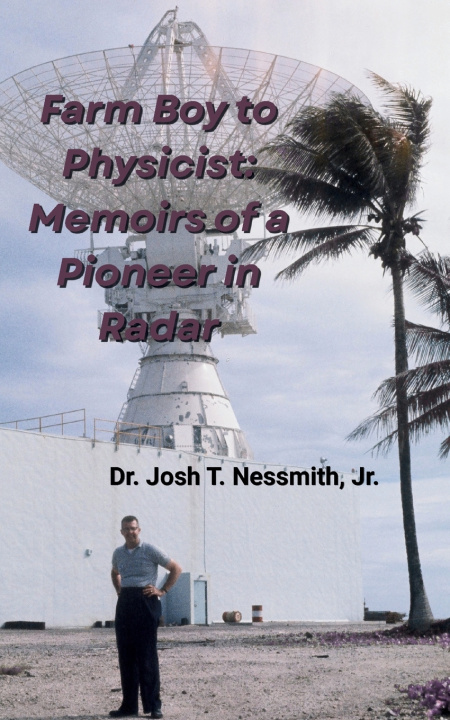
Two sisters were tasked with finalizing their father's memoir after his death. Josh T Nessmith, Jr was a pioneer in radar who came from humble beginnings. Born on a farm and reared during the Great Depression, Josh left his roots to attend Georgia Institute of Technology. While in the midst of his studies, he was drafted into WW II and developed technologies that remain important today.
Before becoming Senior Scientific Advisor at RCA, Dr. Nessmith managed the Systems Engineering Department of the Missile and Surface Radar Division of RCA (now part of Lockheed Martin). During development of the AEGIS Weapon System, he served as Deputy Program Manager and Manager of Systems Engineering, providing direction for RCA and sub-contractor system engineering. As Missile and Surface Radar Systems Engineering Manager, he directed research on multifunction radars and weapon systems. As Project Manager, he was technically responsible for design, fabrication, test, and operation of the TRADEX ABM measurement radar-a mainstay in the development and testing of anti-ballistic and ballistic missiles for five decades. He also performed the system design of key radars in the NASA tracking network.
Upon retiring from RCA, Dr. Nessmith joined Georgia Tech as a Senior Faculty Leader, performing research in radar and teaching Phased-Array Radar Design and Modern Radar. He served as a radar and weapon system consultant to industry and government, including the SDI Radar Discrimination Panel, the Blue Ribbon Panel investigating NEXRAD weather radar requirements, and as Chairman of the ONR review of radar research at the Naval Research Laboratory. He also served as a consultant to the Office of Naval Technology and as a member of the National Academy of Science Advanced Radar Technology Panels.
After retiring from Georgia Tech in 1993, he served twelve years as a staff consultant to Georgia Tech and to the Applied Physics Laboratory of Johns Hopkins University on the Anti-Tactical Missile Panel, and as a radar expert to the BMD Program Office. He continued working until his death.


About the book
English
