
 Contact
 How to shop
Delivery
Shopping guide
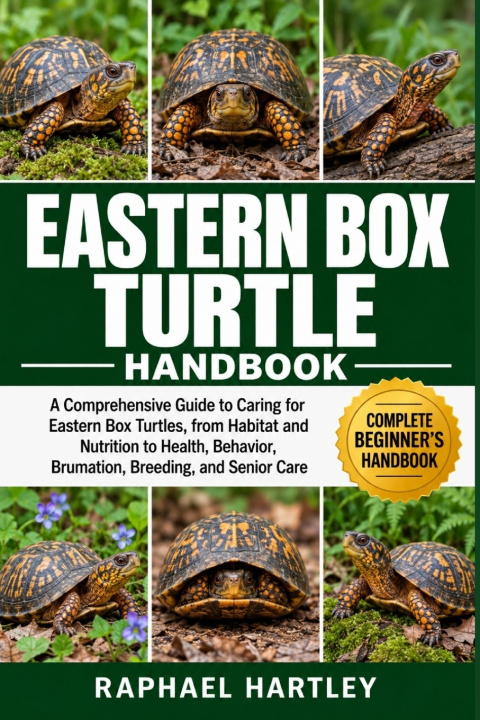
EASTERN BOX TURTLE HANDBOOK
A Comprehensive Guide to Caring for Eastern Box Turtles, from Habitat and Nutrition to Health, Behavior, Brumation, Breeding, and Senior Care
 English
 38 b
38 b
 Coming soon
 New
New
 Delivery to Austria
Up to 30 days for returns

Discover how to understand and responsibly care for the Eastern Box Turtle through every stage of its remarkably long life.
EASTERN BOX TURTLE HANDBOOK is a comprehensive guide to Eastern Box Turtle care, covering habitat design, nutrition, behavior, health, brumation, breeding, and senior care. Whether you are researching the species before acquiring a legally sourced turtle, caring for an established companion, or simply fascinated by these distinctive reptiles, Raphael Hartley provides practical guidance for informed, welfare-focused husbandry.
Eastern Box Turtles are known for their domed shells, terrestrial lifestyle, individual personalities, and ability to close their hinged plastron for protection. They can also be exceptionally long-lived, making responsible ownership a commitment that may extend for decades. Appropriate housing, varied nutrition, environmental management, veterinary support, and careful observation are essential throughout their lives.
Inside this handbook, you'll discover:
• Eastern Box Turtle natural history, anatomy, distribution, behavior, and adaptations
• How to distinguish Eastern Box Turtles and understand individual variation
• Important legal and ethical considerations surrounding acquisition and ownership
• How to select a healthy, responsibly sourced turtle without harming wild populations
• Indoor and outdoor habitat planning, including space, security, shelter, substrate, and enrichment
• Creating appropriate temperature gradients, basking opportunities, UVB exposure, humidity, and seasonal conditions
• How to provide hiding places, digging opportunities, vegetation, water, and other naturalistic habitat features
• Nutritional principles and how dietary needs may change with age
• Feeding variety, supplementation, hydration, portion management, and healthy body condition
• Understanding activity patterns, communication, stress responses, exploration, and other natural behaviors
• Safe handling practices and why unnecessary handling should be minimized
• Routine cleaning, water management, sanitation, and habitat maintenance
• Monitoring weight, appetite, eyes, nose, mouth, shell, skin, movement, droppings, and behavior
• Preventive health care and the importance of a qualified reptile veterinarian
• Recognizing shell problems, respiratory signs, parasites, injuries, nutritional disorders, and other health concerns
• Understanding brumation and the importance of evaluating whether an individual turtle is healthy and appropriately managed for seasonal dormancy
• Breeding behavior, reproductive management, nesting, egg incubation, hatchling development, and responsible placement of offspring
• Adapting husbandry for aging turtles, including changes in mobility, feeding ability, and health
• Emergency preparation, record keeping, long-term financial planning, and succession arrangements
• Responsible rehoming, conservation awareness, and lifelong stewardship
This handbook emphasizes that Eastern Box Turtles should never be casually collected from the wild. Wild populations face pressures that can include habitat loss, road mortality, illegal collection, and fragmentation. Laws governing possession and collection vary by location, so keepers should always verify applicable regulations and prioritize legally obtained animals.
Long-term care is equally important. Because an Eastern Box Turtle may live for many decades, owners should plan beyond immediate needs and consider future housing, veterinary expenses, relocation, temporary caregivers, and who will assume responsibility if they can no longer provide care.
Whether you are a beginner or an experienced reptile enthusiast, EASTERN BOX TURTLE HANDBOOK offers a dependable foundation for providing thoughtful care from youth through the senior years.


About the book
English
Categories

Give this book today
It's easy
1 Add to cart and choose Deliver as present at the checkout 2 We'll send you a voucher 3 The book will arrive at the recipient's addressHi! I'm Libroamiko, your book advisor.
How can I help you?