
 Contact
 How to shop
Delivery
Shopping guide
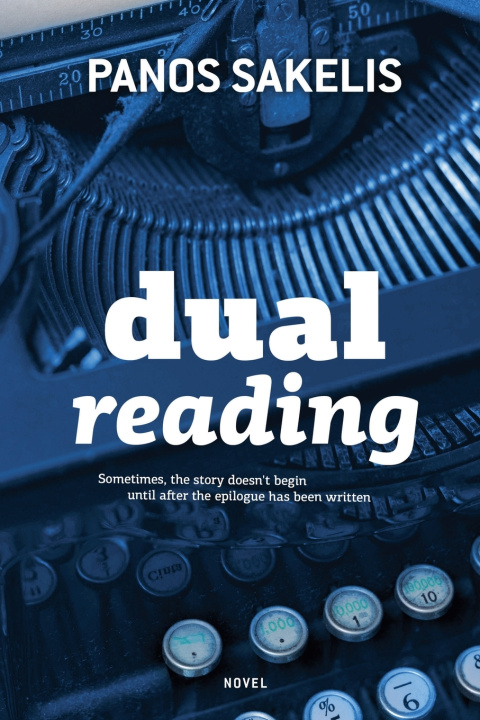
Dual Reading
 English
 49 b
49 b
 Coming soon
 New
New
 Delivery to Austria
Up to 30 days for returns

It is 1968, and Elmer Robinson is a young Navy officer finishing his last watch aboard a destroyer bound for Charleston, South Carolina. A Brooklyn-born son of Irish immigrants, a journalism graduate, and a man who has always worn his solitude like a second skin, Elmer is done with the sea. What he does not expect, on a solitary birthday walk through the Museum of the American Indian in New York, is to meet Marian Delaware, a sharp, green-eyed Native American sociologist who matches his irony line for line. They marry in 1971, twelve guests in total. And when Marian tells Elmer they are expecting a daughter, whom she has already named Alejandra, his world shifts on its axis in a way he cannot yet articulate.
They build a life. Elmer becomes a book editor of some renown, working from home. Marian rises through the academic ranks. Their silences grow deeper, not from animosity but from the particular loneliness of two intensely interior people living in parallel. When their marriage finally breaks, Elmer leaves on his Harley without a plan and ends up at a commune in the Pennsylvania hills called The Garden of the Prophet, its philosophy drawn entirely from Kahlil Gibran's The Prophet, the same book a stranger pressed upon him years earlier in a Charleston hotel lobby. He stays for months, writes his first novel, and begins to understand the shape of what he has lost. But his daughter Alejandra draws him back.
What follows is not one story but many nested within each other: Elmer's slow and imperfect path as a father, Alejandra's own painful journey, which takes her to an ashram in Calcutta where she finds a measure of peace, and the great love of Elmer's later life, the Frenchwoman Blanche Chevallin, a woman of quiet dignity who enters his world in New York and remains in it across two continents and two decades, changing him in ways he only fully understands in retrospect.
When tragedy strikes in India, Elmer travels to the ashram to bring back his granddaughter Ettasa, a small girl clutching a toy monkey, already entirely her own person. Elmer, now in his sixties, raises her alone in New York. This second fatherhood is both comic and devastating: a man who spent a lifetime inside his own head suddenly responsible for another life, navigating pediatricians he never arranged, Hindi lessons, embassy bureaucracy, and a child who simply refuses to be managed. Ettasa gives Elmer something Alejandra never quite managed to: she makes him present.
The novel moves across decades and continents, Brooklyn, the Pennsylvania commune, London, Belfast, Calcutta, Nantes, Dublin, with jazz threading through everything as Elmer's true emotional language. He writes book after book across the years, each one a coded conversation with a woman he has loved or lost. Ettasa becomes the keeper of these manuscripts, receiving each new novel with the same quiet demand: when do you start the next one?
The bond between Elmer and Ettasa is the novel's true spine, built on honesty rather than sentiment, on the understanding that sometimes skips a generation and arrives whole. Through her, Elmer finally begins to do what grief had always prevented. Not literally, Elmer Robinson has never danced a day in his life, but inwardly, in the way that The Prophet had been quietly pointing him toward since that first evening in Charleston when everything, without his knowing it, began.
Dual Reading is a novel about the lives we do not manage to live while living them, about grief navigated through art, about the love between grandparent and grandchild, and about a human soul that insists, against all evidence, on finding its way home.


About the book
English

Give this book today
It's easy
1 Add to cart and choose Deliver as present at the checkout 2 We'll send you a voucher 3 The book will arrive at the recipient's addressHi! I'm Libroamiko, your book advisor.
How can I help you?