
 Contact
 How to shop

Delivery
Shopping guide
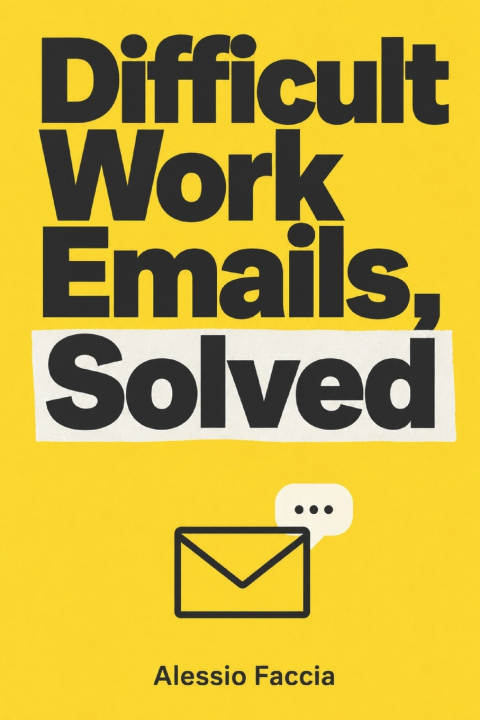
Difficult Work Emails, Solved
Practical Templates for Clear Requests, Firm Boundaries, Conflict Resolution and Professional Replies
 English
 90 b
 Coming soon
 New
 Delivery to Austria
Up to 30 days for returns

Write difficult work emails with a clear purpose, a firm position and a next step.
An unanswered request. An unrealistic deadline. An angry accusation. An overdue invoice. Each demands careful wording and a decision about what happens next.
Difficult Work Emails, Solved by Alessio Faccia provides practical guidance for email writing across 20 common workplace situations. Its explanations, sample messages and reusable wording help you organise the facts, communicate your position and give the recipient an action.
Written for employees, managers, consultants, freelancers and business owners, the book addresses the correspondence people often postpone or rewrite repeatedly. You will learn to prepare requests, follow up after silence, set boundaries, handle disagreement and deliver difficult news with professional judgement.
ASK CLEARLY AND GET A RESPONSE
Prepare requests with a defined purpose, an output and a realistic deadline. Follow up on unanswered emails with context for the recipient to act. Ask for clarification when instructions leave gaps. Request additional time, resources or support. Confirm decisions, responsibilities and agreed next steps so colleagues understand their commitments.
SAY NO AND SET WORKPLACE BOUNDARIES
Decline requests respectfully and explain the limits of your involvement. Address excessive workloads and unrealistic deadlines through specific information about capacity and priorities. Respond to work outside your role, define availability outside working hours and handle repeated pressure after you have given a clear answer. State precisely what you accept and what you decline.
HANDLE CONFLICT AND DIFFICULT FEEDBACK
Respond to angry, accusatory or dismissive messages with a factual account and a clear request. Disagree with a colleague or manager using relevant evidence. Give specific feedback about poor performance. Correct false claims, document the sequence of events and move a heated exchange towards an appropriate decision or meeting.
DELIVER DIFFICULT NEWS AND MANAGE THE NEXT STEP
Acknowledge mistakes and explain corrective action. Communicate delays with a credible update schedule. Chase overdue payments and clarify disputed invoices. Escalate unresolved problems to someone with the authority to act. Prepare resignation messages, agreement endings and handovers with clear dates, responsibilities and outstanding commitments.
Throughout the book, professional communication starts with preparation. Establish what happened, check the supporting records, identify who holds responsibility and decide which response you need. Those decisions give your email its purpose and help you choose wording suited to the relationship.
Practical examples show how to name an action, explain a dependency, request approval and record an agreement. You will learn to distinguish a proposed date from an accepted deadline, a forecast from a commitment and an offer of limited support from ongoing ownership. Each distinction helps prevent confusion about who will do what and when.
The guidance also addresses recipient selection, confidentiality, organisational procedures and the point at which an email needs support from a conversation or formal review. Sample wording provides a starting point for messages grounded in your own facts, authority and working arrangements.
Keep the book within reach when you need to refuse additional work, request a decision, respond to criticism or explain a missed commitment. Read the relevant section, check the circumstances and prepare a reply with a defined outcome.
Whether you supervise a team, serve clients or coordinate work across departments, these business writing techniques support clearer requests, firmer boundaries and dependable written records. The aim is a message the recipient understands and a next step the responsible person knows how to complete.


About the book
English

Give this book today
It's easy
1 Add to cart and choose Deliver as present at the checkout 2 We'll send you a voucher 3 The book will arrive at the recipient's addressHi! I'm Libroamiko, your book advisor.
How can I help you?