
 Contact
 How to shop
Delivery
Shopping guide
 English
 787 b
787 b
 Delivery to Austria
Up to 30 days for returns
Customers also purchased











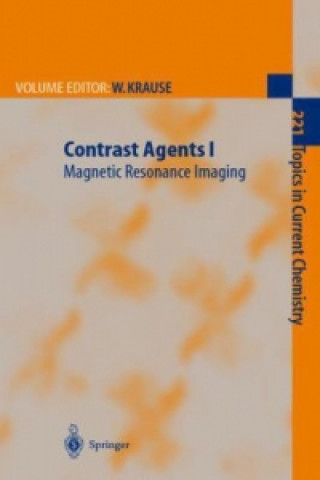
Extracellular MRI and X-ray contrast agents are characterized by their phar- cokinetic behaviour.After intravascular injection their plasma-level time curve is characeterized by two phases. The agents are rapidly distributed between plasma and interstitial spaces followed by renal elimination with a terminal half-live of approximatly 1 2 hours. They are excreted via the kidneys in unchanged form by glomerular filtration. Extracellular water-soluble contrast agents to be applied for X-ray imaging were introduced into clinical practice in 1923. Since that time they have proved to be most valuable tools in diagnostics.They contain iodine as the element of choice with a sufficiently high atomic weight difference to organic tissue. As positive contrast agents their attenuation of radiation is higher compared with the attenuation of the surrounding tissue. By this contrast enhancement X-ray diagnostics could be improved dramatically. In 2,4,6-triiodobenzoic acid derivatives iodine is firmly bound. Nowadays diamides of the 2,4,6-triiodo-5-acylamino-isophthalic acid like iopromide (Ultravist, Fig. 1) are used as non-ionic (neutral) X-ray contrast agents in most cases [1].


About the book
English

Give this book today
It's easy
1 Add to cart and choose Deliver as present at the checkout 2 We'll send you a voucher 3 The book will arrive at the recipient's addressYou might also be interested in


 /
/
 Adobe ePub DRM
 164.19
€
164.19
€


 /
/
 Paperback
20.09
€
Paperback
20.09
€














Hi! I'm Libroamiko, your book advisor.
How can I help you?