
 Contact
 How to shop
Delivery
Shopping guide
Complexity and the Human Experience
 English
 407 b
407 b
 Delivery to Austria
Up to 30 days for returns
You might also be interested in







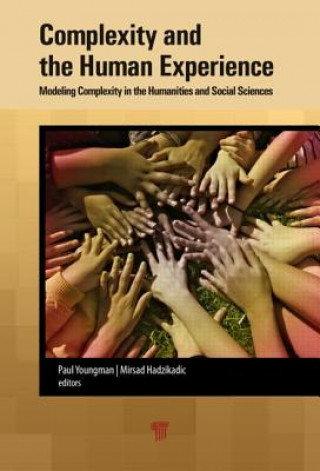
Questions of values, ontologies, ethics, aesthetics, discourse, origins, language, literature, and meaning do not lend themselves readily, or traditionally, to equations, probabilities, and models. However, with the increased adoption of natural science tools in economics, anthropology, and political science—to name only a few social scientific fields highlighted in this volume—quantitative methods in the humanities are becoming more common.
The theory of complexity holds significant promise for better understanding social and human phenomena based on interactions among the participating "agents," whatever they may be: a thought, a person, a conversation, a sentence, or an email. Such systems can exhibit phase transitions, feedback loops, self-organization, and emergent properties. These dynamic systems lend themselves naturally to the kind of analysis made possible by models and simulations developed with complex science tools. This volume offers a tour of quantitative analyses, models, and simulations of humanities and social science phenomena that have been historically the purview of qualitative methods.


About the book
English

Give this book today
It's easy
1 Add to cart and choose Deliver as present at the checkout 2 We'll send you a voucher 3 The book will arrive at the recipient's addressHi! I'm Libroamiko, your book advisor.
How can I help you?