
 Contact
 How to shop
Delivery
Shopping guide
 English
 56 b
56 b
 New
New
 Delivery to Austria
Up to 30 days for returns

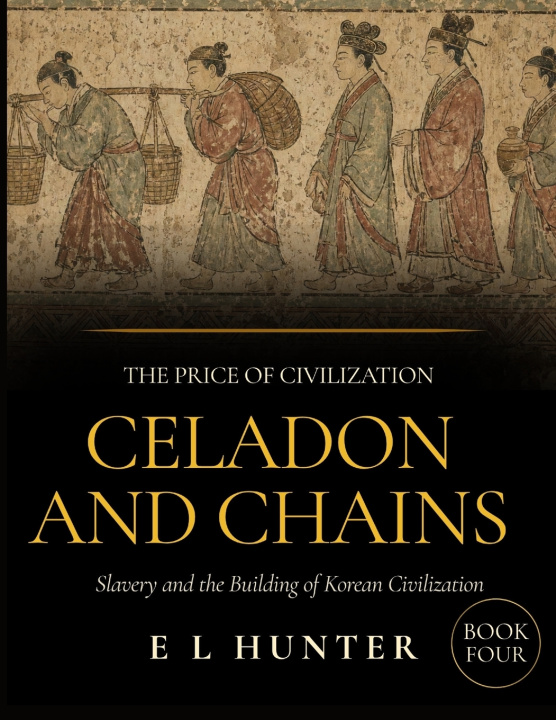
The civilisation that made the most coveted ceramic of the medieval world, the celadon its Chinese rivals ranked first under heaven, fired it in a kingdom that owned a third of its people. For close to a thousand years it ranked people by birth and bound the lowest to the foulest work, and the art and learning the world still admires could not have stood a day without them.
Celadon and Chains tells Korea's story with the unfree at its centre: the potters whose celadon a museum keeps though their names are lost; the slaves who raised the palaces of a new capital; the servants who freed the scholar for his books. Here is the child sold in a famine year for grain to keep her family alive, and the tens of thousands of state slaves whose registers were burned in a palace courtyard in 1801, freed in an afternoon by the dynasty their labour had built.
.It traces, too, the longer shadow: a hierarchy the dynasty called as natural as heaven over earth, and a bondage so completely dissolved that its descendants now claim the blood of the masters. Korean slavery differed, crucially, from that of Greece, Rome, and the Atlantic: its people shared the language, faith, and face of their owners, marked by nothing but birth, enslaved by their own kind and not a foreign one. This is what it means to inherit the celadon, the printing, and the alphabet from a civilisation that built them on the people it owned and then forgot.
Clear-eyed popular history that never looks away. The fourth book in the Price of Civilization series.


About the book
English

Give this book today
It's easy
1 Add to cart and choose Deliver as present at the checkout 2 We'll send you a voucher 3 The book will arrive at the recipient's addressHi! I'm Libroamiko, your book advisor.
How can I help you?