
 Contact
 How to shop
Delivery
Shopping guide
 English
 40 b
40 b
 New
New
 Delivery to Austria
Up to 30 days for returns

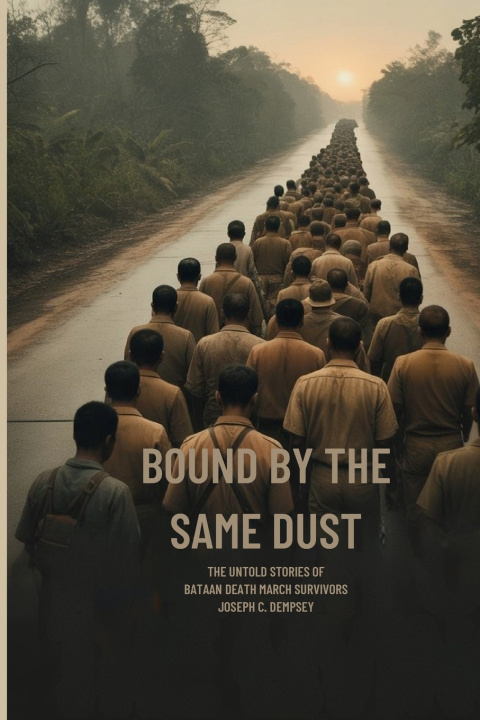
Seventy-six thousand men surrendered on the Bataan Peninsula on April 9, 1942. The march that followed became one of the deadliest forced movements of prisoners in modern military history. This is the story of the men who survived it.
Bound by the Same Dust draws on decades of documented survivor testimony, military records, and oral history archives to tell the full human story of the Bataan Death March and its aftermath. It begins in the final months of peace, when American and Filipino soldiers stationed in the Philippines could not have imagined what was coming. It ends long after the war itself concluded, in the living rooms and veterans halls and hospital wards where survivors spent decades trying to make sense of what they had endured and what it had cost them.
Between those two points lies one of the most demanding survival stories in the history of armed conflict.
The men in these pages walked sixty-five miles under a Philippine sun with no food, almost no water, and guards who treated weakness as an offense punishable by death. They survived starvation camps where disease claimed dozens of lives each day. They crossed the Pacific in the sealed holds of cargo ships never designed to carry human beings. They worked in coal mines and steel foundries in Japan while the war ground slowly toward its conclusion. And when liberation finally came, they faced the quieter but equally demanding challenge of returning to a country that celebrated their survival without understanding what survival had actually required.
What kept them alive was not exceptional individual strength. The men who endured longest were those who refused to stop looking out for each other. They shared the last of their water. They carried comrades who could no longer walk. They maintained informal networks of support and mutual care under conditions specifically designed to destroy those bonds. Filipino soldiers and American GIs, officers and enlisted men, soldiers from opposite ends of the country who had never spoken to each other before captivity, found in shared suffering a form of brotherhood that outlasted the war by decades.
This book does not treat the Bataan Death March as a footnote to larger Pacific strategy. It treats it as what it actually was: an experience that tested the outermost limits of human endurance and revealed, in the process, something permanent and important about what people are capable of doing for each other when circumstances take everything else away.
The history is documented. The suffering was real. The lessons belong to anyone willing to receive them.


About the book
English

Give this book today
It's easy
1 Add to cart and choose Deliver as present at the checkout 2 We'll send you a voucher 3 The book will arrive at the recipient's addressHi! I'm Libroamiko, your book advisor.
How can I help you?