
 Contact
 How to shop
Delivery
Shopping guide
 English
 113 b
113 b
 Delivery to Austria
Up to 30 days for returns
Customers also purchased












 /
/
 Paperback
 42.95
€
42.95
€

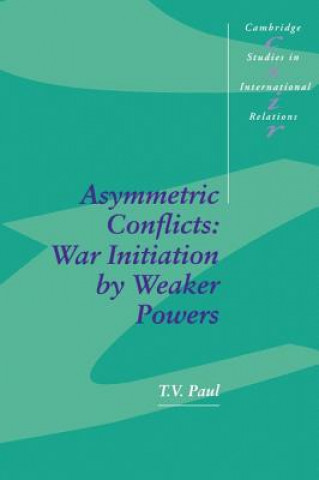
This book examines a question generally neglected in the study of international relations: why does a militarily and economically less powerful state initiate conflict against a relatively strong state? T. V. Paul analyses this phenomenon by focusing on the strategic and political considerations, domestic and international, which influence a weaker state to initiate war against a more powerful adversary. The key argument of deterrence theory is that the military superiority of the status quo power, coupled with a credible retaliatory threat, will prevent attack by challengers. The author challenges this assumption by examining six twentieth-century asymmetric wars, from the Japanese offensive against Russia in 1904 to the Argentine invasion of the Falkland Islands in 1982. The book's findings have wide implications for the study of war, power, deterrence, coercive diplomacy, strategy, arms races, and alliances.


About the book
English
Categories

Give this book today
It's easy
1 Add to cart and choose Deliver as present at the checkout 2 We'll send you a voucher 3 The book will arrive at the recipient's addressYou might also be interested in



 /
Hardback
112.39
€
/
Hardback
112.39
€


 /
/
 Adobe ePub DRM
57.71
€
Adobe ePub DRM
57.71
€
 /
Paperback
145.59
€
/
Paperback
145.59
€



Hi! I'm Libroamiko, your book advisor.
How can I help you?