
 Contact
 How to shop

Delivery
Shopping guide
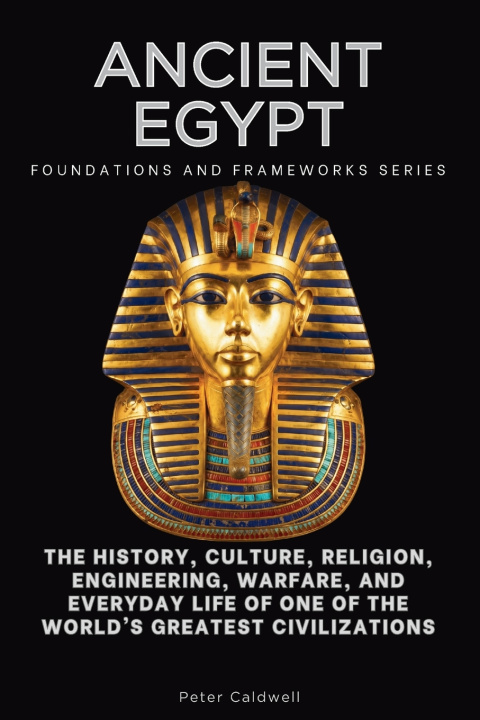
Ancient Egypt
The History, Culture, Religion, Engineering, Warfare, and Everyday Life of One of the World's Greatest Civilizations
 English
 39 b
 New
 Delivery to Austria
Up to 30 days for returns

Ancient Egypt lasted about 3,000 years, from the first kings around 3100 BCE to the death of Cleopatra VII in 30 BCE. This book gives you the full story in one readable volume, along with the evidence behind it, so you understand what happened, who recorded it, and how historians reached their conclusions.
The first four chapters run in order, from the Nile flood to Roman conquest. The next six each follow one part of Egyptian life through the centuries, so when you reach the tomb builders of Deir el-Medina or the war against the Hittites, you already know the kings, dates, and places involved.
Ten chapters cover:
- The Nile inundation, Kemet and Deshret, the Badari and Naqada cultures, and Narmer's unification of the Two Lands
- Djoser, Sneferu, Khufu, and the pyramid age
- Hatshepsut, Thutmose III, Akhenaten's Amarna revolution, Tutankhamun, and Ramesses II
- Kushite pharaohs, Assyrian invasions, Persian rule, Alexander, and the Ptolemies until Rome took over
- Viziers, grain taxes, law courts, and trade with Punt and Byblos
- Ma'at, the ka and ba, the weighing of the heart, the Book of the Dead, and how mummification actually worked
- Hieroglyphic, hieratic, and demotic scripts
- Scribal schools, wisdom texts, love poetry, and the proportion grids that gave Egyptian art its recognizable look
- Marriage, women's legal rights, bread and beer, board games, and daily routines in a workers' village
- Chariots, Nubian fortresses, Megiddo, Kadesh, and the Sea Peoples
- Quarrying and raising stone at Giza, the Nilometer, the 365-day calendar, and medicine in the Edwin Smith and Ebers papyri
Many sections close with a summary table of names, dates, and comparisons for fast review. Each chapter ends with a discussion question, and a separate section gives example responses so you can test your reasoning against a worked answer.
You also get a timeline of how our knowledge grew, with stops at Herodotus, Champollion's decipherment of the Rosetta Stone, and modern CT scans of royal mummies, plus a glossary of terms, references, and recommended readings.
Written for:
- High school and college students taking courses on early civilizations
- Teachers and homeschool parents who want a dependable reference with discussion questions built in
- Adult readers who love museums, archaeology, and documentaries
The book shows where the evidence is solid and where scholars still disagree. You will see why most Egyptians left few traces, why Ramesses II's account of Kadesh needs a second look, and why the old belief that slaves built the pyramids has little support.
After reading, a walk through a museum's Egyptian gallery will make sense in a new way, and the next headline about a cursed tomb will get the skepticism it deserves. Pick it up for the pyramids and stay for the people who built them.


About the book
English

Give this book today
It's easy
1 Add to cart and choose Deliver as present at the checkout 2 We'll send you a voucher 3 The book will arrive at the recipient's addressHi! I'm Libroamiko, your book advisor.
How can I help you?