
 Contact
 How to shop
Delivery
Shopping guide
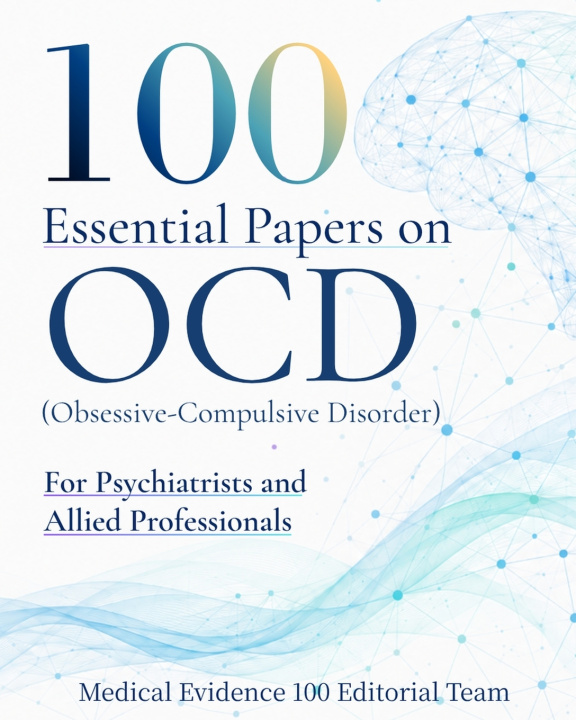
100 Essential Papers on OCD(Obsessive-Compulsive Disorder)
For Psychiatrists and Allied Professionals
 English
 42 b
42 b
 New
New
 Delivery to Austria
Up to 30 days for returns

100 Essential Papers on Obsessive-Compulsive Disorder (OCD) Every Psychiatrist and Healthcare Professional Should Know
Obsessive-Compulsive Disorder (OCD) is one of the most fascinating-and surprisingly complex-conditions in psychiatry.
For many years, OCD was classified as an anxiety disorder. Today, however, it is recognized as a distinct condition within the category of Obsessive-Compulsive and Related Disorders, reflecting the growing understanding that anxiety alone cannot fully explain its mechanisms.
Recent research has examined OCD from multiple perspectives, including intrusive thoughts, inflated responsibility, intolerance of uncertainty, repetitive checking, distrust of memory, habit formation, impaired goal-directed control, and abnormalities in brain circuits. Far beyond the stereotypes of excessive cleanliness or simply being "a worrier," OCD has emerged as an increasingly complex and multidimensional disorder.
This book brings together and systematically organizes 103 essential papers that psychiatrists, clinical psychologists, healthcare professionals, and everyone involved in the treatment and support of people with OCD should know.
It covers the major domains of OCD research, including diagnosis, epidemiology, long-term outcomes, psychological mechanisms, Exposure and Response Prevention (ERP), Cognitive Behavioral Therapy (CBT), Acceptance and Commitment Therapy (ACT), pharmacotherapy, pediatric OCD, family accommodation, comorbid autism spectrum disorder (ASD) and tic disorders, neuroimaging, genetics, transcranial magnetic stimulation (TMS), deep brain stimulation (DBS), quality of life, and suicide risk.
Major Topics CoveredDiagnosis, epidemiology, and long-term outcomes of OCD
The Yale-Brown Obsessive Compulsive Scale (Y-BOCS) and symptom assessment
Symptom dimensions including contamination and cleaning, checking, symmetry, and taboo or unacceptable thoughts
Intrusive thoughts and inflated responsibility
Repetitive checking and reduced confidence in memory
Goal-directed control and habit formation
Mechanisms underlying Exposure and Response Prevention (ERP)
CBT, ACT, metacognitive therapy, and digital interventions
SSRIs, clomipramine, and antipsychotic augmentation
Treatment-resistant OCD
Pediatric OCD and family accommodation
Comorbid ASD and tic disorders
Cortico-striatal circuits and neuroimaging research
Genetics and genome-wide association studies (GWAS) of OCD
Brain stimulation treatments including TMS and DBS
Quality of life, social functioning, and suicide risk
OCD is neither an "incurable disorder" nor a condition that can simply be cured by taking medication.
Psychology. Behavioral science. Pharmacology. Neuroscience. Genetics.
Through more than 100 landmark studies, this book provides a multidimensional understanding of what OCD is, how it develops, and how it can be treated.
Recommended for psychiatrists, psychosomatic medicine physicians, clinical psychologists, licensed psychologists, nurses, residents, medical students, and everyone involved in OCD care and support, this book serves as both an evidence-based introduction to OCD and an up-to-date guide to the research shaping contemporary clinical practice.


About the book
English

Give this book today
It's easy
1 Add to cart and choose Deliver as present at the checkout 2 We'll send you a voucher 3 The book will arrive at the recipient's addressHi! I'm Libroamiko, your book advisor.
How can I help you?